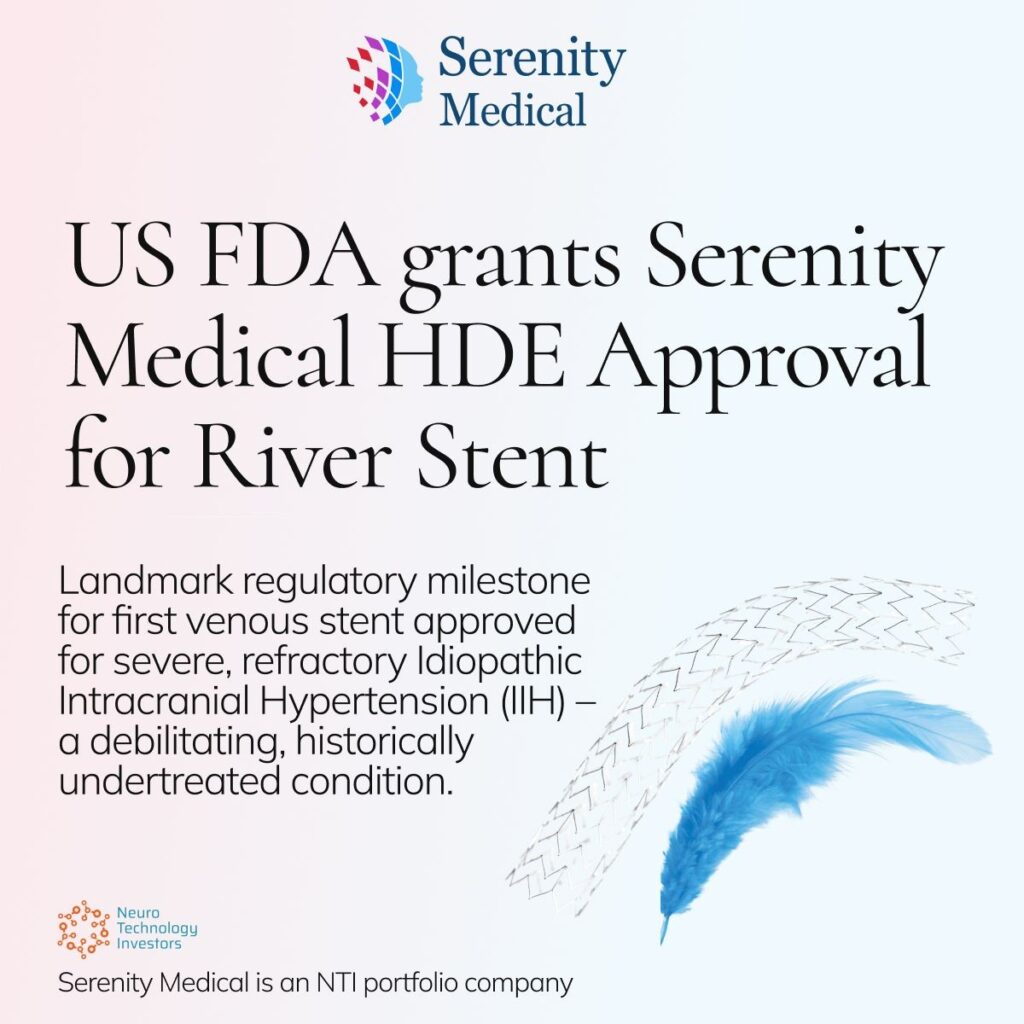
On March 31, 2026 a landmark announcement was made, there is a medical device approved for the treatment of IIH, in those who have failed medical therapy.
IdiopathicThe term idiopathic is used when there is no detectable reason for something. Click the term to read more Intracranial Hypertension (IIH), is a neurological condition of high brain pressure causing vision changes, debilitating headaches, brain fog, and more. If untreated it can lead to permanent visual changes, brain changes and vision loss. Before one receives a diagnosis, IIH patients may endure years of misdiagnosis, pain, frustration, and economic burden.(1) Even with a proper diagnosis, there is no definitive treatment.
IIH is currently managed with recurring lumbar punctures, prescriptions for off-label medications, shuntA hollow tube that can be surgically placed in the sinus to help drain cerebrospinal fluid. Click the term to read more placement, and weight loss regimens; there is no cure.
Though the definition of IIH implies that there is no known cause, recent years have shown identifiable causes such as venous sinus stenosis. The U.S. Food and Drug Administration approved through the Humanitarian Device Exemption for the River™ stent to be used for the treatment of severe idiopathic intracranial hypertension (IIH) in adult patients who have failed medical therapy.
What is a Humanitarian Device Exemption (HDE)?
This is a regulatory pathway utilized for a medical device, intended to treat or diagnose a rare disease or condition, to be allowed for use on patients when no comparable treatment exists. (2)
Here is an excerpt from the press release from Serenity Medical:
“The FDA review and approval of the River stent is based on the findings of The River Study: the first multicenter trial of a novel venous stent for the treatment of Idiopathic Intracranial Hypertension (IIH), published in the Journal of Neurointerventional Surgery (JNIS) in February 2025. The study was a prospective, open-label, multi-center, single-arm trial that enrolled 39 subjects at five U.S. centers and aimed to demonstrate the safety and probable benefit of the River stent in patients who are refractory or intolerant to medications. The River Study’s one-year results met the primary safety endpoint with an observed major adverse event rate of 5.4%.i Improvements were observed in opening CSFFluid that is made by specialized cells in the ventricles of the brain. Click the term to read more pressure, headaches, papilledemaSwelling of the optic nerve that carries visual signals from the eye to the brain. Click the term to read more, pulsatile tinnitusA whooshing or throbbing noise heard in one or both ears that can range from annoying to debilitating. Highly associated with venous sinus stenosis. Click the term to read more, visual symptoms, and Quality of Life scores.”(3)
To read the full press release, click here.