From Fear to Flourishing: My Journey Through IdiopathicThe term idiopathic is used when there is no detectable reason for something. Click the term to read more Intracranial Hypertension
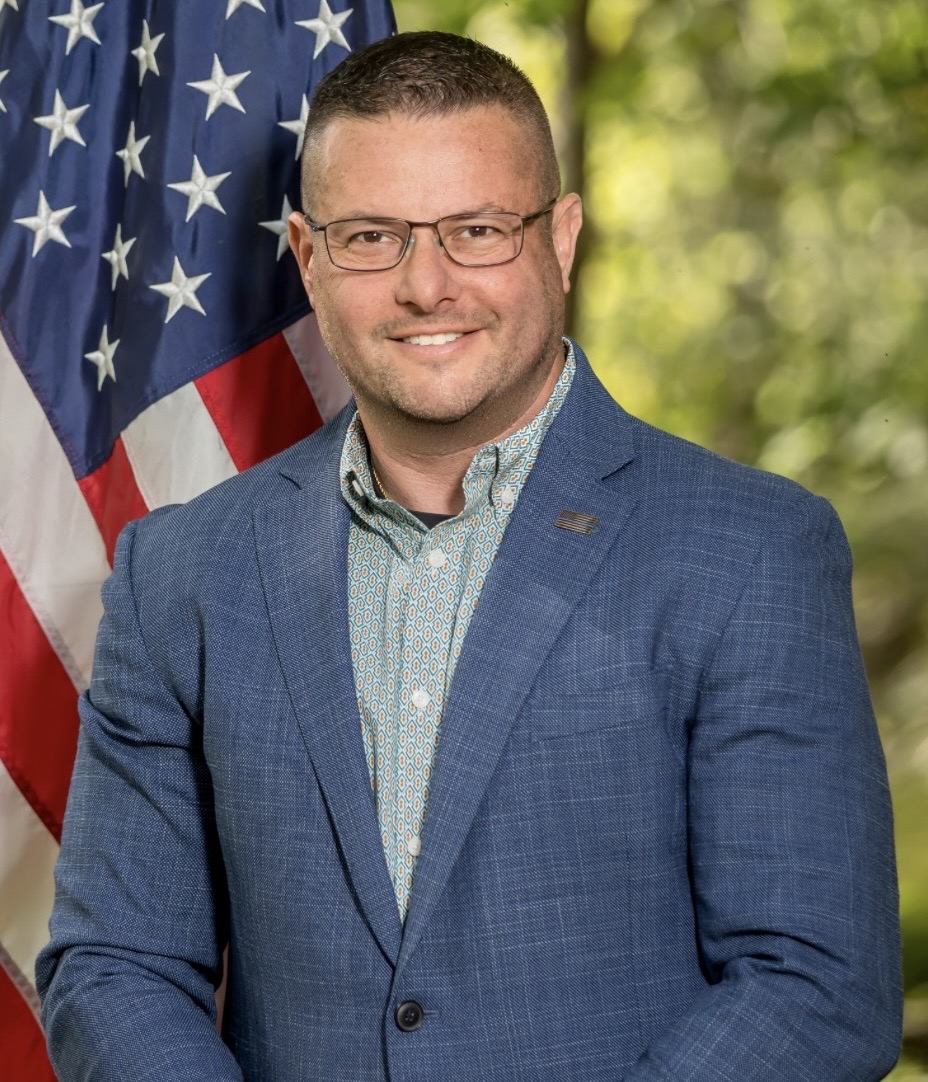
I spent more than three decades in emergency services, including over 20 years as a police officer. Throughout my career, I encountered people experiencing some of the worst moments of their lives. I learned to remain calm in chaos, make decisions under pressure, and navigate situations where uncertainty was the only certainty. I thought those experiences had prepared me to confront just about anything.
Then, in February 2025, I began losing my vision.
At 49 years old, I was a husband, father of three, retired police officer, author, and positive psychology practitioner. I considered myself relatively healthy, with an athletic build and an active lifestyle. I enjoyed cycling, skiing, hiking, and spending time with my family. Like many people approaching 50, I had some minor medical concerns, including rising blood pressure and cholesterol, but nothing that suggested my life was about to change dramatically.
My first indication that something might be wrong occurred in November 2024 during a routine eye examination. My pupils seemed unusually slow to react to light, and I had been experiencing occasional mild headaches. The initial thought was that I might be experiencing ocular migraines. Nothing seemed particularly alarming, and I continued living my life.
On February 9, 2025, while on a ski trip, I noticed something different. My peripheral vision was beginning to disappear. I was concerned, but not overly worried. Perhaps those suspected ocular migraines were becoming more pronounced.
Over the next several days, however, my symptoms progressed rapidly. My field of vision began narrowing, almost as though someone were slowly closing the aperture of a camera lens. My right eye was particularly affected, and my left eye was not far behind. I was experiencing nausea, sweating, unusual thirst, and a level of anxiety that was becoming increasingly difficult to control.
For someone who had spent a career managing emergencies, I suddenly found myself confronting a crisis I could neither explain nor control.
On February 14, an examination revealed swelling of my optic nerves, known as papilledemaSwelling of the optic nerve that carries visual signals from the eye to the brain. Click the term to read more. The potential explanations were frightening. Brain swelling, a tumor, or some other neurological condition could be responsible. Given my family’s medical history, including glioblastoma where my Mom dies at age 54 only 8 weeks after diagnosis, the possibility of a brain tumor was particularly terrifying.
What followed was a whirlwind of medical testing and hospitalization. CT and MRI scans fortunately revealed no visible tumor. A lumbar punctureA procedure where a needle is placed in the lower part of the spine (the lumbar spine) to access cerebrospinal fluid. Click the term to read more demonstrated significantly elevated intracranial pressure, with an opening pressure of 36. Additional testing included an MR venogram, during which I experienced a severe allergic reaction to contrast material and coded.
I spent five days hospitalized at a local community hospital, undergoing tests and searching for answers. When I was discharged, idiopathic intracranial hypertension, or IIH, was strongly suspected, but I still lacked a formal diagnosis. The next available neurology appointment was
months away.
Those 48 hours following my discharge were among the most emotionally challenging of my life.
I experienced panic attacks, sleepless nights, loss of appetite, and overwhelming anxiety. I had spent years teaching others about resilience, emotional regulation, and psychological well-being, yet here I was struggling to apply those same principles to myself. The possibility of losing my vision was terrifying, and the uncertainty surrounding my diagnosis only amplified that fear.
Fortunately, I was not navigating this alone.
My wife became what I affectionately describe as the project manager of my medical crisis. She made phone calls, researched specialists, consulted medical professionals, and relentlessly advocated for my care. More importantly, she provided the emotional stability I was struggling to find within myself. Along with my sister and other family members, she reminded me that even when I felt powerless, I was never alone.
Through the network of a friend, two day later on February 21, I was evaluated by Dr. Sashank Prasad, a global leader in neuro-ophthalmology at Penn Medicine’s Perelman Center. Following extensive testing, followed by in-patient symptom management, I finally had a diagnosis: idiopathic intracranial hypertension.
IIH is a rare neurological condition characterized by elevated pressure surrounding the brain without an identifiable underlying cause. It is most commonly associated with younger women living with obesity. As a 49-year-old, physically active man, I did not fit the typical patient profile.
I remember thinking that I didn’t belong in any of the categories generally associated with this disease. Yet there I was, confronting its consequences.
My treatment began with Diamox, a medication intended to reduce the production of cerebrospinal fluidFluid that is made by specialized cells in the ventricles of the brain. Click the term to read more and lower intracranial pressure. Further evaluation ultimately led to a neurovascular intervention by Dr. Visish Srinivasan at Penn Medicine, another global leader in neuro-vascular surgery and interventionist for IIH.
Testing revealed severe narrowing, or stenosis, involving approximately 90% of one area of my right transverse venous sinusA left and right channel that drains deoxygenated blood from the back of the head into systemic circulation. Click the term to read more, along with another area of moderate narrowing. A venous sinus Zilver® Self-Expanding stent was placed to improve drainage and relieve the pressure contributing to my symptoms.
One of the most meaningful parts of my experience was the relationship I developed with my medical team. Both Dr. Prasad and Dr. Srinivasan communicated with extraordinary compassion. They never made me feel rushed, explained complex medical issues in understandable terms, and treated me as a person rather than simply a diagnosis. Their willingness to connect on a human level gave me something desperately needed during that period: confidence and hope.
Throughout this journey, I began drawing more intentionally upon something that had become central to my professional life: positive psychology.
I hold a Master of Applied Positive Psychology from the University of Pennsylvania, where I studied the science of human flourishing, resilience, meaning, and well-being. Much of my professional work involves helping first responders navigate adversity and move beyond simply surviving toward living meaningful, fulfilling lives.
Suddenly, I had an opportunity, albeit an unwanted one, to apply these concepts to my own medical crisis.
I began using controlled breathing to manage anxiety and regulate my emotional responses. Music, particularly the work of Aaron Lewis, became an important source of comfort and engagement. I focused on remaining present, limiting unnecessary distractions, and taking an active role in medical decisions.
I also began reframing my internal narrative.
Instead of continually asking, “Why is this happening to me?” I challenged myself to consider, “Why is this happening for me?”
This was not an attempt to romanticize my illness or suggest that suffering was somehow necessary. I would never have chosen IIH, and I would gladly have avoided the fear, uncertainty, and medical complications it brought into my life. But I recognized that while I could not control the diagnosis, I could influence how I responded to it. Victor Frankl famous said, “Those who have a ‘why’ to live, can bear with almost any ‘how’.”
I could become an active participant in my recovery rather than a passive observer of my illness.
Following surgery, I approached recovery with the same intentionality. I focused on rest, hydration, stress reduction, mindfulness, music, and gradually increasing physical activity. Walking became both a physical and psychological intervention. Each walk represented progress. Each improvement in my vision, each positive medical assessment, and each return to a familiar activity became an accomplishment worth recognizing.
My recovery was not simply about restoring physical function. It was about reclaiming my identity.
I did not want to define myself as a person suffering from IIH. I was still a husband, father, cyclist, educator, and someone committed to serving others. IIH had become part of my story, but I was determined that it would not become the entirety of my story.
One of the most powerful moments came approximately 60 days after surgery, when I participated in the Police Unity Tour, a four-day, 300-mile bicycle ride from New Jersey to Washington, D.C., for the 14th consecutive year. For me, the significance extended far beyond the physical achievement. It represented a return to purpose, connection, and a life that only weeks earlier had seemed uncertain, if not forever lost.
Today, my implanted stent continues to function satisfactorily, providing improved venous drainage. My papilledema has stabilized, and my vision has reached a plateau. My left eye has returned to 100%, while my right eye remains at approximately 73%. I continue to manage my medical needs and follow my treatment plan, but I have returned to cycling, weightlifting, skiing, hiking, kayaking, traveling, and working without activity restrictions.
My life is not exactly the same as it was before IIH, but it remains full of possibilities.
Through this experience, I have come to appreciate the practical application of the PERMA model of well-being, developed by the famed Dr. Martin Seligman. Marty is not only the academic descendant of the Stoics, Aristotle, Plato, Freud, and others. He is my teacher, mentor, and friend. Positive emotions, Engagement, Relationships, Meaning, and Accomplishment became more than academic concepts. They became tools that helped me navigate uncertainty and reclaim control over the parts of my life that remained within my influence.
Positive emotions emerged through music, humor, storytelling, and time outdoors. Engagement came from participating in my own medical care and eventually returning to meaningful activities. Relationships, particularly with my wife, sister, family, friends, and medical team, became foundational sources of strength and comfort. Meaning came from recognizing that my experience might one day help someone else. Accomplishment came from celebrating even the smallest victories along the way, from the early days of literally putting on foot in front of the other to biking, skiing, and hiking to now living life uninhibited by the disease.
Perhaps the most important lesson I learned is that resilience does not mean the absence of fear.
I was afraid. At times, I was overwhelmed. Despite all my training and professional experience, there were moments when I felt emotionally defeated. My knowledge of positive psychology did not immunize me from suffering, and optimism did not eliminate the very real medical challenges I faced.
What those tools provided was a pathway forward.
I often speak about the difference between being a victim of circumstance and becoming the victor of our response. We cannot always choose what happens to us, but we can work toward choosing how we engage with what happens next.
For anyone newly diagnosed with IIH, particularly those frightened by the prospect of vision and hearing loss or frustrated by the uncertainty of a rare disease, I want to offer something more meaningful than simply telling you to stay positive.
Give yourself permission to be afraid. Ask questions and educate yourself. AdvocateTo self-advocate in your health is to communicate your needs Click the term to read more for your care. Surround yourself with people who will support you when your own strength feels insufficient. Celebrate small victories and resist allowing a diagnosis to completely redefine who you are.
- Gratitude and contribution journal
- Gratitude wall
- Three blessings exercise
- Positive portfolio
- Storytelling- Me at my best and best possible self
Most importantly, recognize that hope and fear can coexist. Courage is not the absence of fear, but the willingness to move forward in its presence. Courageous Optimism©!
My journey with IIH has reinforced a philosophy that has guided much of my life: Let go of what you cannot control, and take control of what you can.
I would never have chosen this diagnosis. But I can choose what I do with the experience, the lessons I carry forward, and the hope I offer to others.
My story is not simply about surviving a rare disease. It is about discovering that even when our world becomes uncertain, opportunities for meaning, connection, growth, and flourishing remain. This is the concept of anti-fragility, benefiting because of the adversity.
And as I often remind those I teach, “If you can breathe, there is still fight left in you.”